India’s Olympic Journey: From Struggles to Global Recognition
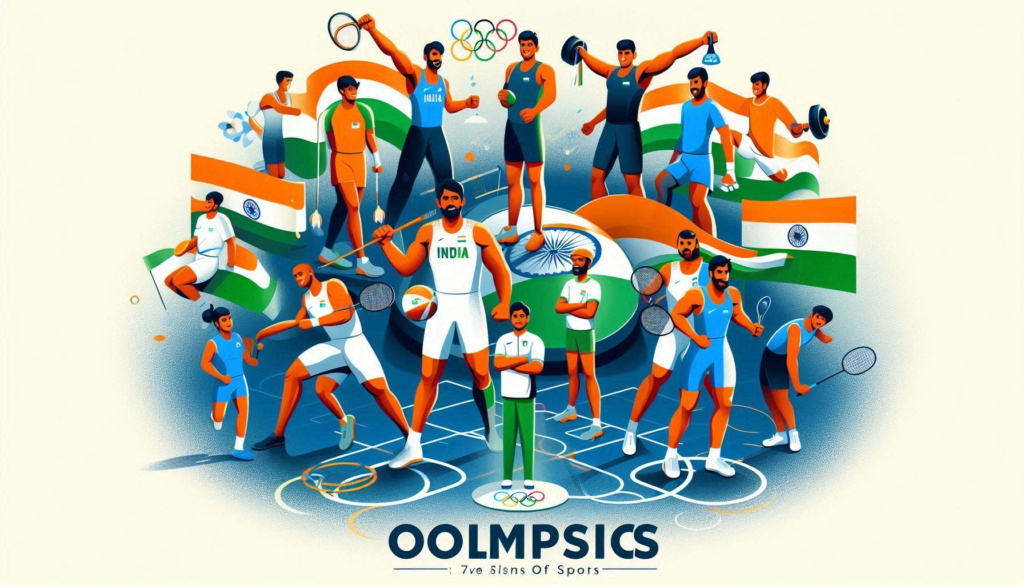
India’s journey in the Olympic Games is a story of perseverance, resilience, and gradual transformation. From a modest beginning with limited success to emerging as a competitive force on the global stage, the country’s Olympic narrative reflects both its challenges and its growing sporting ambitions.
Early Years: A Slow Start
India made its Olympic debut at the 1900 Summer Olympics, where Norman Pritchard won two silver medals in athletics. Despite this early success, India struggled to make a consistent impact in the following decades.
However, a golden era soon followed in field hockey. Between 1928 and 1956, India dominated the sport, winning six consecutive gold medals. Legendary players like Dhyan Chand became symbols of excellence, earning global admiration and putting India firmly on the Olympic map.
Post-Independence Challenges
After independence in 1947, India continued to perform well in hockey but struggled in other sports. The lack of infrastructure, funding, and professional training systems hindered the country’s ability to produce world-class athletes across disciplines.
For several decades, India’s Olympic medal tally remained limited, with occasional successes such as Leander Paes winning a bronze medal in tennis at the 1996 Summer Olympics.
Turning Point: The Rise of Individual Excellence
The 21st century marked a turning point in India’s Olympic journey. Athletes began to break barriers and excel in diverse sports beyond hockey.
A historic moment came at the 2008 Summer Olympics when Abhinav Bindra won India’s first individual Olympic gold medal in shooting. This achievement inspired a new generation of athletes and highlighted the importance of investment in sports science and infrastructure.
Subsequent Olympics saw remarkable performances from athletes like Mary Kom, Saina Nehwal, and P. V. Sindhu, who brought home medals and recognition.
The Golden Moment: Neeraj Chopra’s Triumph
India reached a new milestone at the 2020 Summer Olympics (held in 2021), when Neeraj Chopra won a gold medal in javelin throw. This was India’s first-ever Olympic gold in athletics, a moment that captured the imagination of the entire nation.
Chopra’s victory symbolized a shift in India’s sporting landscape—showing that Indian athletes could compete and win in track and field events traditionally dominated by other nations.
Growing Support and Infrastructure
India’s recent Olympic success can be attributed to improved infrastructure, government initiatives, and private support. Programs like Khelo India and Target Olympic Podium Scheme (TOPS) have played a crucial role in identifying and nurturing talent.
Additionally, corporate sponsorships, better coaching facilities, and exposure to international competitions have significantly enhanced athletes’ performance levels.
Future Prospects: A Rising Sporting Nation
India’s performance at recent Olympics indicates a promising future. With a young population, increasing awareness about sports, and a growing culture of fitness, the country is poised to achieve greater success.
Emerging athletes in wrestling, boxing, athletics, and badminton continue to push boundaries. The focus is now shifting towards building a sustainable sports ecosystem that can consistently produce Olympic champions.
Conclusion
India’s Olympic journey is no longer defined by struggle alone—it is now a story of determination, progress, and global recognition. From the dominance of hockey legends like Dhyan Chand to the modern-day heroics of Neeraj Chopra, the nation has come a long way.
As India continues to invest in sports and nurture talent, the dream of becoming a top Olympic nation seems increasingly within reach. The journey is ongoing, but the direction is clear—towards excellence, pride, and a stronger presence on the world stage.